Atheism
Definition
Atheism includes any philosophy which claims that no God or gods exist, including any rational or reasoning creator of the universe.
Keywords: Atheism, Philosophy, God, Rational, Veracity, False, Belief, Reason, Contradictory, Argument From Reason.
Veracity
Atheistic claims are false .
Proof
Any view regarding the external world that denies the possibility of rational thought regarding the external world prohibits warrant for the deductive process and is thus deductively false.
Premise 1: If premises begin to exist without reason, then conclusions drawn from them are also without reason.
Premise 2: If there is no god, all initial human premises about the external world begin to exist without reason.
Conclusion: Therefore, if there is no god, all human conclusions about the external world are also without reason.
If there is no god, there is no reason to accept the universality or the invariance of logic or the deductive process, making atheistic claims themselves deductively false.
This Argument from Reason demonstrates that god exists.

Gilbert Guttlebocker, Defender of Dragons
Riveting, yet absurd; romantic, yet innocent; Gilbert Guttlebocker, Defender of Dragons is a little Roald Dahl, a little Harry Potter, and a little Chronicles of Narnia, all rolled into one. Timothy McCabe collaborates with the great Benedict Ballyhoot to bring you the novel of the century!
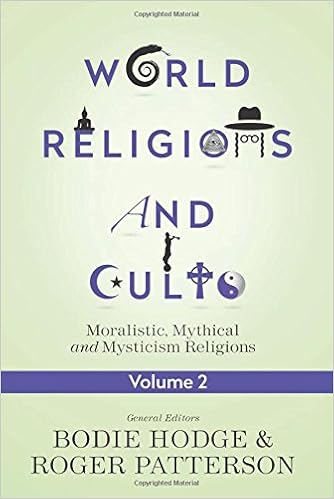
In Printed Form
Along with numerous other authors including Don Landis, Bodie Hodge and Roger Patterson, Timothy McCabe contributes analyses of various world religions and cults in this volume from Master Books.
Other Writings
"What happens to people who don't accept what you claim?"
Nothing happens to people who don't accept what I personally claim. However, Jesus made some striking statements about those who do not accept HIS claims. He taught that the two greatest commandments were to love the Lord God with all your heart, soul, mind, and strength; and to love your neighbor as yourself. (Matthew 22:37-39) In Luke 16, Jesus tells a story about a rich man and a beggar named Lazarus.
Continue reading...
"Is God omnibenevolent?"
The answer, as with most questions, depends on how one defines the terms. If "omnibenevolence" means that God is always and perfectly desiring "the good", then yes, God is omnibenevolent (Mark 10:18; Romans 12:2). If, on the other hand, it means that God is always and only desiring the eternal and ultimate happiness of all humans, then no, God is not omnibenevolent (1 Samuel 15:2-3; Genesis 6:7).
Continue reading...
"Why did your omniscient and omnipotent god think it was a good idea to use a BOOK to relay his vitally important message to mankind?"
Interestingly enough, the book of Romans informs us that all we need to know about God has been revealed to us individually as part of our created essence, or nature, or being. Romans 1:18-20 For the wrath of God is revealed from heaven against all ungodliness and unrighteousness of men who suppress the truth in unrighteousness, because that which is known about God is evident within them; for God made it evident to them.
Continue reading...