Pantheism
Definition
Pantheism denotes any philosophy which claims that god and the universe are identical.
Keywords: Pantheism, Philosophies, Philosophy, Rational, Justification, Assumption, Presupposition, Contradiction, Reason, Universal Truth.
Veracity
Pantheistic claims are false .
Proof
Humans assume the universal truth that all contradictions are false. Any worldview that does not allow for this assumption to be rationally justified is deductively false.
Premise 1: If absolute ultimacy is shared, then universal truth claims are believed without reason.
Premise 2: Under pantheism, absolute ultimacy is shared by the fundamental elements of the universe.
Conclusion: Therefore, under pantheism, universal truth claims are believed without reason.
If pantheistic claims are true, there is no reason to believe universal truth claims, including universal noncontradiction. There is then no reason to believe that contradictory claims are deductively false, thereby making pantheistic claims themselves deductively false.
This Argument from Reason demonstrates that pantheism is false.
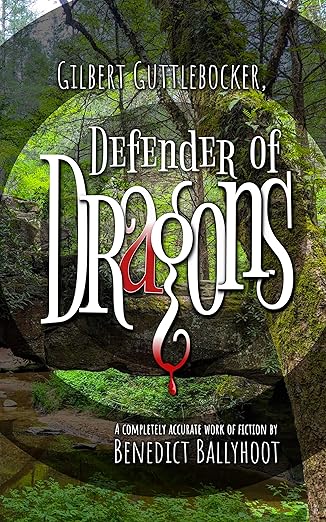
Gilbert Guttlebocker, Defender of Dragons
Riveting, yet absurd; romantic, yet innocent; Gilbert Guttlebocker, Defender of Dragons is a little Roald Dahl, a little Harry Potter, and a little Chronicles of Narnia, all rolled into one. Timothy McCabe collaborates with the great Benedict Ballyhoot to bring you the novel of the century!
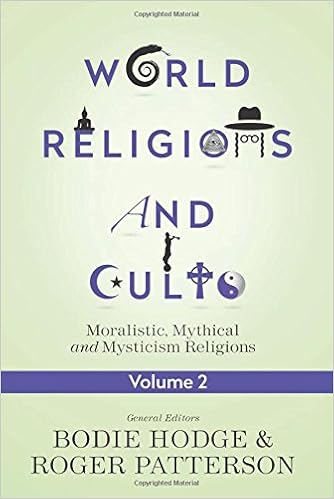
In Printed Form
Along with numerous other authors including Don Landis, Bodie Hodge and Roger Patterson, Timothy McCabe contributes analyses of various world religions and cults in this volume from Master Books.
Other Writings
"If God said "Thou shalt not kill" then why did he flood the whole world leaving only Noah and his family alive, and how is the destruction of Sodom justified (killing people for engaging in "immoral" sex), is God exempted from morality?"
If you have small children, you may have told them that they are not allowed to answer the door, or to talk to strangers. Since they are your children, it is morally wrong for them to disobey you, at least in any circumstance where your commands do not go directly against God's commands (Ephesians 6:1; Colossians 3:20). This means that it would be morally wrong for your children to answer the door, or to talk to strangers, because in so doing, they would be disobeying you.
Continue reading...
"Do you deny that Deuteronomy 18:18-19 is speaking about Prophet Muhammad? If so please explain your reasoning"
Deuteronomy 18:15-19 (NASB) The LORD your God will raise up for you a prophet like me from among you, from your countrymen, you shall listen to him. This is according to all that you asked of the LORD your God in Horeb on the day of the assembly, saying, "Let me not hear again the voice of the LORD my God, let me not see this great fire anymore, or I will die." The LORD said to me, "They have spoken well.
Continue reading...
Open Theism is false: a simple proof
Open theism refers to any philosophy which claims that there is a supreme creator of the universe who does not foreknow the outcome of human choices.
Continue reading...