Christianity
Definition
Christianity is the philosophy that claims that Jesus of Nazareth is the Son of God and Jewish Messiah (or Christ); that he was crucified, died and was buried, and rose again three days later; that his death was an atoning sacrifice for the sins of his followers; and that placing one's trust in Jesus is how any sinful person can be forgiven and made righteous before their creator.
Keywords: Christianity, Jesus, Philosophy, Messiah, Christ, God, Crucified, Sacrifice.
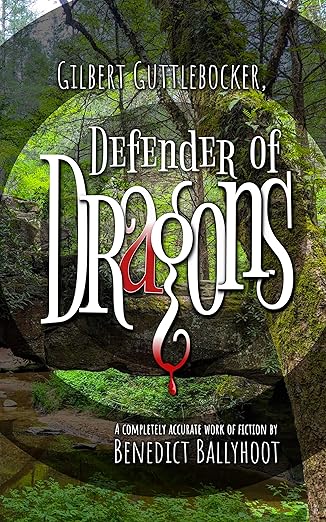
Gilbert Guttlebocker, Defender of Dragons
Riveting, yet absurd; romantic, yet innocent; Gilbert Guttlebocker, Defender of Dragons is a little Roald Dahl, a little Harry Potter, and a little Chronicles of Narnia, all rolled into one. Timothy McCabe collaborates with the great Benedict Ballyhoot to bring you the novel of the century!
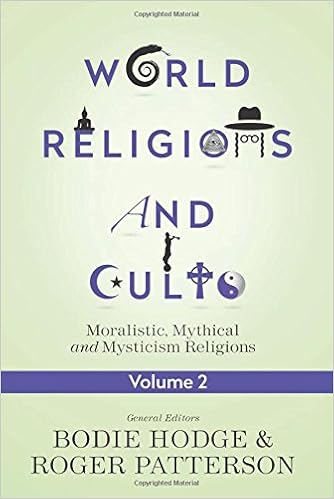
In Printed Form
Along with numerous other authors including Don Landis, Bodie Hodge and Roger Patterson, Timothy McCabe contributes analyses of various world religions and cults in this volume from Master Books.
Other Writings
"Is unitarianism true or false?"
Unitarianism, as opposed to Trinitarianism, is the view that divine sovereignty is not shared in any way. Effectively, in unitarian views, there is not only just one God, but He is only revealed through just one person. In Trinitarian Christianity, the one God is revealed through three persons, the Father, the Son, and the Holy Spirit.
Continue reading...
"Where is the justice in punishing us for Adam's sin?"
According to scripture, we are not punished for Adam's sin (Ezekiel 18). Rather, Adam's fall from perfection has impacted us (Romans 5). For example, if you are descended from a dog, you will be a dog. If you are descended from a parrot, you will be a parrot. If you are descended from a sinner, you will be a sinner. We have inherited Adam's sin-nature, not Adam's punishment. Thus, we are not punished for Adam's sin, but rather, we are punished for our own sin.
Continue reading...
Open Theism is false: a simple proof
Open theism refers to any philosophy which claims that there is a supreme creator of the universe who does not foreknow the outcome of human choices.
Continue reading...