Rational Justification
How are our beliefs justified? What counts as a rationally justified belief and what counts as an irrational claim?
In order for a belief or claim to be rationally justified, it must have justifying reason behind it. However, as many have pointed out, this seems to lead to problems with basic beliefs that we all take for granted, such as universal, invariant noncontradiction. What reason could anyone have for believing in noncontradiction? It doesn't seem possible for it to be a conclusion, because it must be presupposed in order to come to any conclusion. But how can justifying reason be behind a claim of noncontradiction if it has to be presupposed to come to any conclusions? Noncontradiction seems like an arbitrary assumption!
Many people have philosophically (though almost never practically) embraced solipsism as a result of the difficulty of first principles (or first premises, or ultimate presuppositions).
It seems to me that there are three and only three methods by which beliefs can be rationally justified.
Initially, either the justifying reason behind my belief is my own reason, or it is someone else's reason. There are no other options.
Someone Else's Reason
1. Imputation
If it is someone else's reason, then the belief or claim has been imputed into me, and its justification (or lack thereof) goes along with it.
Imputation, the first of the three methods, is seen when we recognize that the premises of a calculator are rationally justified. The calculator's reason didn't justify its premises: they were justified in the mind of its creator.
My Reason
On the other hand, if it is my reason, it is either my reason by means of my will, or it is my reason regardless of my will. Again, there are no other options.
2. Authorship
If it's my reason by means of my will, then I'm the author of the fact and also the author of the claim. All of C.S. Lewis' claims about Tumnus the Faun are rationally justified, because Lewis' will simply is the authority regarding the facts about Tumnus. Authorship is the second method.
3. Discovery
Finally, if it is my reason regardless of my will, then I have engaged in discovery. Discovery is the third and final method. Discovery always involves conclusions based on prior premises. If the premises are not justified, the conclusion likewise is not justified.
Minting the Coin or Passing the Buck
It seems to me that these are literally the only three possible methods for rational justification of a claim.
However, two of these methods (imputation and discovery) simply kick the can down the road. Imputation takes an already-justified claim and moves it from one claimant to another; while discovery takes already-justified claims and uses them to formulate a new claim.
Authorship is the only method of the 3 that actually provides ultimate rational justification for a claim: the justifying reason behind it.
Therefore, it seems to me that our first principles -- if rationally justified -- are imputed to us by their author. And, the author of our first principles is the willful author of universal invariant truths, and therefore the author of time and space.
In other words, if you are rational, then God exists.
More of My Writing on the Subject

Gilbert Guttlebocker, Defender of Dragons
Riveting, yet absurd; romantic, yet innocent; Gilbert Guttlebocker, Defender of Dragons is a little Roald Dahl, a little Harry Potter, and a little Chronicles of Narnia, all rolled into one. Timothy McCabe collaborates with the great Benedict Ballyhoot to bring you the novel of the century!
In Printed Form
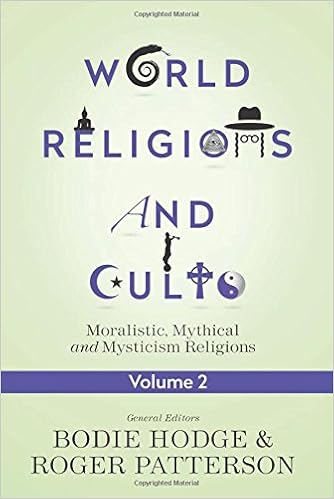
Along with numerous other authors including Don Landis, Bodie Hodge and Roger Patterson, Timothy McCabe contributes analyses of various world religions and cults in this volume from Master Books.
Other Writings
"In Romans 1:23, God clearly says "you have brought down the image of the uncorruptible God to corruptible man". How then can you call Jesus God?"
This question is a continuation of an earlier question, linked to at the bottom of my answer. The question was asked in several parts, so I have compiled all of the questions together here, and will answer them all at once. In full, the questioner asks: "You mentioned that Jesus has two seperate identities. How? Did not Jesus say that he was 'the son of man'?
Continue reading...
"If God is a mysterious unexplainable trinity, then why, when Jesus was posed the question which of the commandments are greatest, did he reply "Hear O Israel The Lord OUR God is ONE?" Note he's not preaching the trinity."
Indeed there are numerous portions of scripture that proudly proclaim that there is only one God. However, remember that this is not in conflict in any way, shape, or form with Trinitarian doctrine, which likewise demands that there is only one God. Trinitarians are monotheists. We believe that there is only one God. Let's go over the three planks of Trinitarianism: 1. There is only one God. 2. This one God is revealed in three persons: Father, Son and Holy Spirit. 3.
Continue reading...
"If God created everything and decided how it would be, wouldn't our sins be his fault?"
The word "fault" means a defect or an imperfection. God has no defects or imperfections, and it is nonsensical to suggest that the contrary could be true, for if God had defects or imperfections, they would not be recognized as defects or imperfections by anyone, including Him, and thus to call them defects or imperfections would be utterly meaningless. Further, if God were anything other than perfect-in-every-way, nothing could be trusted at all since He is the source of everything.
Continue reading...