Who was Executed with Christ?
John Malone has suggested that scripture makes it clear that at least four criminals were crucified at the same time as Christ. This is in contrast to the majority and historically normative view that only two criminals were crucified at the same time as Christ. Bill Vigus asked me to review this claim and share my thoughts.
Let's start with the relevant scriptures.
And He, bearing His cross, went out to a place called the Place of a Skull, which is called in Hebrew, Golgotha, where they crucified Him, and two others with Him, one on either side, and Jesus in the center. John 19:17-18
The plain reading of this in my mind is that they crucified a total of three people when they crucified Christ. All the English translations I checked read basically the same way. I suspect Malone would agree.
But let's read on.
Then the soldiers came and broke the legs of the first and of the other who was crucified with Him. But when they came to Jesus and saw that He was already dead, they did not break His legs. John 19:32-33
This is where Malone sees a problem with the three-crosses-view. Why would the soldiers break the legs of one man on the left, then circle around the middle convict, then break the legs of the man on the right, then return to the middle convict? That certainly seems like odd behavior.
Malone then posits that the first two criminals whose legs were broken had to be on one side of Christ. That is (he suggests) the only reasonable explanation for why they would come to Christ third.
I suggest we stop right there and think about the unwarranted conclusion Malone has come to.
After all, if one soldier went to the man on the left and another soldier to the man on the right, breaking their legs at basically the same time, then meeting each other for the last man in the middle, we have a very reasonable scenario that matches the scriptural narrative with only three crucified men.
Alternatively, if the convicts were in a triangle shape, such that Christ was in front a bit, with each convict behind him and also to either side, it would also be very reasonable for the soldiers to break the legs of the men in back before going to the man in front. This is a second very reasonable scenario that matches the scriptural narrative with only three crucified men.
Or, if the convicts were indeed in a straight line, and if the soldiers did indeed go to the man on the right first, then go around Christ to get to the man on the left, there may have been a good reason they did so that we are simply not privy to.
For example, perhaps the other two convicts were making a racket and the soldiers were annoyed by them, whereas Christ, being dead already, wasn't annoying. Or perhaps the other two convicts had stolen from the families of the soldiers themselves, whereas Christ had not personally offended them. Who knows?
In short, it seems to me that there is no good reason to posit that, just because the soldiers broke the legs of two convicts first, and just because there was at least one convict to Christ's right and another to his left, that therefore there must have been more than three men being crucified. The conclusion simply isn't necessitated by the premises.
Let's look at all the other relevant scripture.
Then two robbers were crucified with Him, one on the right and another on the left. Even the robbers who were crucified with Him reviled Him with the same thing. Matthew 27:38,44
Like John, Matthew also only mentions three people being crucified and gives us no reason to think there were more.
With Him they also crucified two robbers, one on His right and the other on His left. Even those who were crucified with Him reviled Him. Mark 15:27,32
Mark only mentions three people being crucified and gives us no reason to think there were more.
There were also two others, criminals, led with Him to be put to death. And when they had come to the place called Calvary, there they crucified Him, and the criminals, one on the right hand and the other on the left. Then one of the criminals who were hanged blasphemed Him, saying, “If You are the Christ, save Yourself and us.” But the other, answering, rebuked him, saying, “Do you not even fear God, seeing you are under the same condemnation? And we indeed justly, for we receive the due reward of our deeds; but this Man has done nothing wrong.” Then he said to Jesus, “Lord, remember me when You come into Your kingdom.” And Jesus said to him, “Assuredly, I say to you, today you will be with Me in Paradise.” Luke 23:32-33,39-43
Luke also only mentions three people being crucified and gives us no reason (internal to his own narrative, at least) to think there were more.
However, another argument that might be offered to suggest that there were more than three men on crosses that day is that Matthew and Mark both say that the two other men reviled Christ, whereas Luke tells us that one of them did and the other defended him. That might make it sound like there were at least three other men being crucified: two reviling Christ and one defending him.
But, crucifixions take a long time, and if one of the convicts mocked Christ but later repented, that would easily explain the apparent discrepancy.
So there doesn't seem to me to be any good reason in my mind to reject what appears to me to be the plain interpretation of the texts -- that there were only three crucified men there at the time.
Now, sometimes in historical narration a narrator may mention that someone was present and not mention others that were present. For example, compare Matthew 28:1 with Mark 16:1 with John 20:1.
This may be done for any number of reasons. They may only mention the central characters; they may have received information second-hand and only be stating the presence of those that they could confirm were there; they may only be stating the experience of those they had spoken with about the events first-hand. Etc.
I can't be absolutely certain that this is not what the gospel authors have done at the crucifixion. But since all of them mention three people, and John seems to even imply that there were ONLY three people with the way his narrative is translated in every English translation I checked, I'll stick with three.
But it's nothing I would be inclined to fight over.
I'd love to hear your feedback (even if you aren't John Malone). If you'd like to continue the discussion, feel free to send me a tweet, or email me if Twitter just won't work for the furtherance of the discussion.

Gilbert Guttlebocker, Defender of Dragons
Riveting, yet absurd; romantic, yet innocent; Gilbert Guttlebocker, Defender of Dragons is a little Roald Dahl, a little Harry Potter, and a little Chronicles of Narnia, all rolled into one. Timothy McCabe collaborates with the great Benedict Ballyhoot to bring you the novel of the century!
In Printed Form
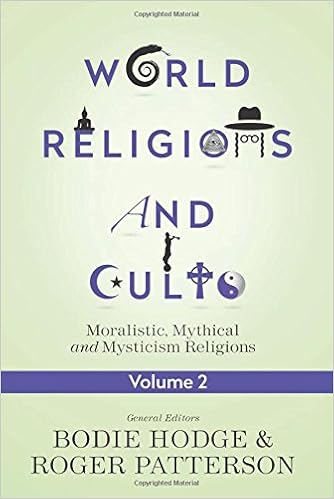
Along with numerous other authors including Don Landis, Bodie Hodge and Roger Patterson, Timothy McCabe contributes analyses of various world religions and cults in this volume from Master Books.
Other Writings
"Is there a question to which you all would give the same - or almost the same - answer?"
I certainly can't speak authoritatively for the opinion of anyone other than myself, but it seems to me that everyone can easily be convinced to agree that if something is, then it is; and also that nothing can both be and not be at the same time and in the same way. In other words, the Laws of Logic are valid. An interesting point to note, however, is that holding to the Laws of Logic can only be rationally justified under Christian assumptions.
Continue reading...
"Here is another contradiction of the millions in the bible: Hebrews 6:18 vs. Ezekiel 14:9, if you think this isn't a contradiction, please respond with proof from scripture."
Hebrews 6:17-18 (NKJV) Thus God, determining to show more abundantly to the heirs of promise the immutability of His counsel, confirmed it by an oath, that by two immutable things, in which it is impossible for God to lie, we might have strong consolation, who have fled for refuge to lay hold of the hope set before us.
Continue reading...
"Does your faith or worldview have a specific stance on abortion? What is it?"
The Bible condemns the killing of human beings (Exodus 20:13; Deuteronomy 5:17; Matthew 5:21; Mark 10:19, etc) when it is done without the express permission or command of God Himself. For example, governments have God's permission to execute murderers and certain other types of criminals (Genesis 9:6; Numbers 35:17; Leviticus 20:2, 24:14, 24:16; Deuteronomy 13:10; Romans 13:4) and to wage wars against nations under certain circumstances (Numbers 31:7; Joshua 8; 1 Samuel 15:18).
Continue reading...