Monotheism
Definition
Monotheism refers to any philosophy which claims that there is only one supreme creator of the universe.
Keywords: Monotheism, Atheism, Polytheism, Theism, Philosophy, True, Deductive, Creator, Universe.
Veracity
Monotheistic claims are true .
Proof
Either there are no gods, and therefore atheistic claims are true, or there are many gods, and therefore polytheistic claims are true, or there is only one god, and therefore monotheistic claims are true.
Premise 1: If atheistic claims and polytheistic claims are both false, then monotheistic claims are true.
Premise 2: Both atheistic and polytheistic claims are false.
Conclusion: Therefore, monotheistic claims are true.
Since both atheistic and polytheistic claims are deductively false, monotheistic claims are therefore deductively true.

Gilbert Guttlebocker, Defender of Dragons
Riveting, yet absurd; romantic, yet innocent; Gilbert Guttlebocker, Defender of Dragons is a little Roald Dahl, a little Harry Potter, and a little Chronicles of Narnia, all rolled into one. Timothy McCabe collaborates with the great Benedict Ballyhoot to bring you the novel of the century!
In Printed Form
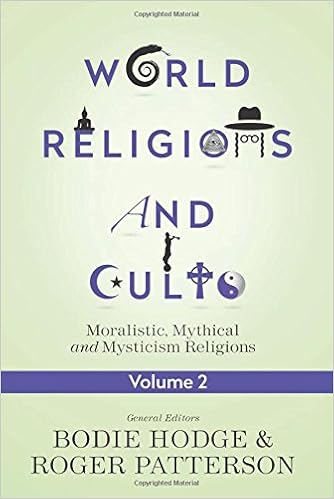
Along with numerous other authors including Don Landis, Bodie Hodge and Roger Patterson, Timothy McCabe contributes analyses of various world religions and cults in this volume from Master Books.
Other Writings
"If, as you claim, morality is obeying god, how do you know that obeying god is good? Isn't that totally circular?"
If morality is obeying god, then obeying god is morality. If we grant the former, then the latter follows by tautological necessity. Is it circular? Insofar as tautologies are circular, sure. Here is another circular tautology: If 2 + 2 = 4, then 4 = 2 + 2. Totally circular. Malachi 3:18; Romans 4:15, 5:13; 1 John 3:4.
Continue reading...
"Mr. McCabe, you obviously don't read your own Bible. On the first page alone (Genesis) in the Arabic Bibles around the world the word Allah is there 17 times. YHWH was only given in Exodus, there aren't any vowels, so why did you say Yahweh?"
This question appears to be in response to my answer to the question "Aren't Allah, Brahman and Yahweh just different names for the same God?". Thanks for your comments. When I read the question "Aren't Allah, Brahman and Yahweh just different names for the same God?", my understanding was that the questioner was suggesting that it was possible that we all worship the same God, just by different names. The thrust of my argument was that we worship different Gods.
Continue reading...
"It seems when we examine real objects close enough, they become illusory at the quantum level. Also, the self seems to be an illusion in the strictest sense. Yet it is also real since it exists. What is the difference between reality and illusion?"
Both "reality" and "illusion" are simply words. As words, they carry the definitions that their speakers intend for them to have, and that their listeners read into them. What this means is that "reality" and "illusion" both have multiple meanings, and their definitions in a particular circumstance must be determined by context. For example, I could say that my brother is real, a part of reality. I could say that Tom Sawyer is not real.
Continue reading...