Islam
Definition
Islam refers to the specific philosophy of the Muslims, a monotheistic and unitarian belief system declared by Muhammad in 610 AD and described in the book known as the Qur'an.
Keywords: Islam, Philosophy, Unitarianism, False, Veracity.
Veracity
Islamic claims are false .
Proof
Islam is a form of unitarianism.
Premise 1: All unitarian philosophies are false.
Premise 2: Islam is a unitarian philosophy.
Conclusion: Therefore, Islam is false.
Since unitarian claims are false, Islam is also false.

Gilbert Guttlebocker, Defender of Dragons
Riveting, yet absurd; romantic, yet innocent; Gilbert Guttlebocker, Defender of Dragons is a little Roald Dahl, a little Harry Potter, and a little Chronicles of Narnia, all rolled into one. Timothy McCabe collaborates with the great Benedict Ballyhoot to bring you the novel of the century!
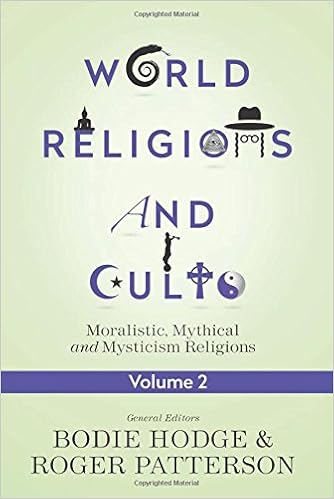
In Printed Form
Along with numerous other authors including Don Landis, Bodie Hodge and Roger Patterson, Timothy McCabe contributes analyses of various world religions and cults in this volume from Master Books.
Other Writings
"Why should one believe in the validity of the Bible?"
Much could be said about manuscript evidence (demonstrating conclusively that the Bible has been reliably passed down to us), archaeological evidence (demonstrating that the locations, lifestyles, and many of the people in the Bible are genuine), eyewitness testimonies and changed lives (demonstrating the genuine sincerity of the authors, such as the apostles Peter and Paul, who were executed for their claims), and fulfilled prophecies (such as Daniel 9:24-25, Leviticus 26:44, Jeremiah...
Continue reading...
"What would you say to members of Islamic State and al-Qaeda?"
Repent. You owe your lives to your Creator, and each and every sin you have committed is a moment you have stolen from Him. You can never get those moments back, so you can never pay the debt you owe Him. As long as you continue to try to earn His favor, you are guaranteed to fail. But there is hope. God Himself has provided a solution -- a way you can actually be right with Him. And it appears to me that the Qur'an itself points the way.
Continue reading...
"How did polar bears get from the middle east to the polar ice caps, and penguins to Antarctica, and all the strange Australian beasts to Australia, etc., without leaving populations behind?"
The Bible does not tell us the specific answer to this question, and neither does pure logic, therefore there is no official "Christian" answer. This means Christians are free to speculate about questions like this, keeping in mind that such speculations should not overshadow what is really important in our walk with Christ -- namely, what is clearly revealed in scripture.
Continue reading...