Rationalism
Definition
Rationalism describes any philosophy that claims that beliefs and opinions should always be logical, deductive conclusions rather than being based on experience, observations, religious teachings, or divine revelation.
Keywords: Rationalism, Philosophy, Logical, Reasoning, Deductive, Experience, Observations, Religious, Revelation, Contradictory.
Veracity
Rationalistic claims are false .
Proof
All self-refuting or contradictory claims are deductively false.
Premise 1: Only deductive conclusions should be believed.
Premise 2: Premise 1, being the foundation or starting point of the philosophy, is not itself a deductive conclusion.
Conclusion: Therefore, premise 1, also known as "rationalism", should not be believed.
Rationalistic claims, when adhered to, require the rejection of rationalistic claims. To accept them is to reject them, making rationalism inherently contradictory and deductively false.

Gilbert Guttlebocker, Defender of Dragons
Riveting, yet absurd; romantic, yet innocent; Gilbert Guttlebocker, Defender of Dragons is a little Roald Dahl, a little Harry Potter, and a little Chronicles of Narnia, all rolled into one. Timothy McCabe collaborates with the great Benedict Ballyhoot to bring you the novel of the century!
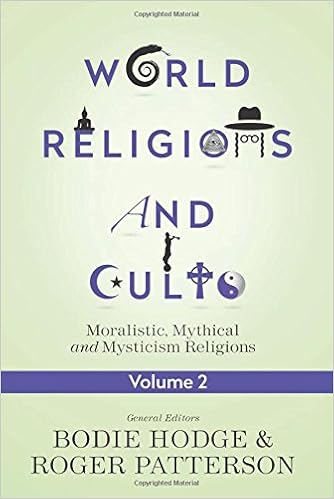
In Printed Form
Along with numerous other authors including Don Landis, Bodie Hodge and Roger Patterson, Timothy McCabe contributes analyses of various world religions and cults in this volume from Master Books.
Other Writings
"How is God any different than Santa Claus?"
This is sort of an odd question as there are so many very obvious differences. For example, Santa wears a red hat, whereas God doesn't have a physical head to put a hat onto. I don't know of any religion or worldview that claims that God climbs in and out of chimneys, either. There is, in this question, an implicit attack on theism. However, it is quite possibly one of the silliest attacks on theism I have ever encountered, and I encounter it rather frequently.
Continue reading...
"Did Jesus preach non-violent submission?"
Jesus preached faith in Himself. Sometimes, this involves non-violent submission. Other times, it involves the use of violence and uprising. Christ taught that He Himself was God in the flesh (John 6:51-54, 8:58, 10:30, 14:7-9). This means that according to Him, His teachings and God's teachings are one-in-the-same (John 5:19). Therefore, if God commands either non-violent submission, or violent uprising, then Jesus also commands these same things.
Continue reading...
"How do fossils exist if the Earth is supposedly 6000 years old?"
The vast majority of the fossils we find on this planet are the result of the catastrophic global flood around 2350 BC, recorded in Genesis 6-8, and memories of which remain throughout the histories and traditions of cultures around the world. The "billions of dead things buried in rock layers laid down by water all over the earth" are a very clear testament to the accuracy of the Biblical narrative, and to the results of human sin and rebellion against God (Genesis 6:5, 6:12, 6:17).
Continue reading...